A very brief summary (appetizer?) of gastrodiplomacy

October 4, 2026

To consume is one of the most basic fundamentals of life.

Unlike written words, spoken tongues, or painted art, food has acted as an accessible and permanent constant throughout history. People have bonded over it. They’ve prayed over it. They’ve fought over it. And recently, it’s become a part of policy. 

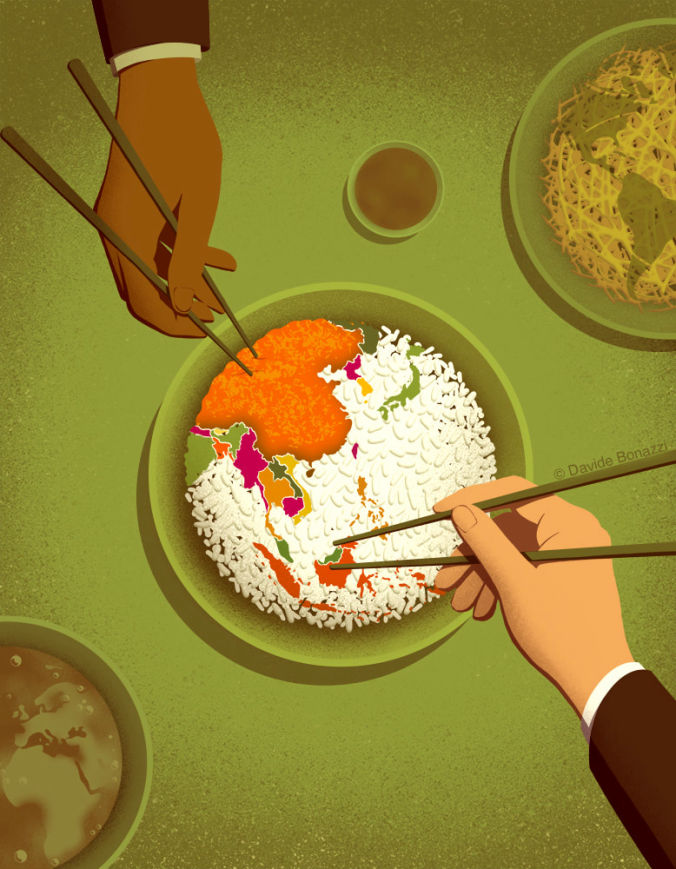
Image credit: Davide Bonazzo
Mobirise Website Builder

Soft power, unlike hard power, is the subtle cultural influence that a country exercises on the rest of the world. Instead of weapons or money, soft power would is language, healthcare, education, and, of course, food. While hard power is valued for its obvious benefits, soft power can be equally influential. Johanna Mendelson Forman, leader of the Social Gastronomy Movement, says in this podcast episode:

"Food is a great equalizer even when we live in times of so much division. Coming around the table, the ancient practice of commensality, is something I believe helps lead to a more inclusive society. I study the connection between food and war because even in the 21st century food is the cheapest weapon of war" (Forman). 

Highly gastrodiplomatic countries tend to be geographically small, but known globally for their culture, specific dishes, and “authentic-ness” (can’t be easily replicated without expertise and special ingredients). Take, for example, Thailand and Peru. In this article, Valeriya Safronova states the following: 

"Certainly, gastrodiplomacy has the potential to boost tourism. According to the World Food Travel Association, about 53 per cent of people who travel choose to visit a destination specifically for its food. Peru launched a successful gastrodiplomacy campaign in the 2010s; since then, the country of 34 million has been touted as a top culinary destination…" (Safranova).

Gastrodiplomacy is a form of soft power, but it is primarily a government-led phenomenon. Safronova goes on to list Indonesia’s “Spice Up the World” campaign, and South Korea’s “World Institute of Kimchi”.

While food content on social media has helped gastrodiplomacy permeate further, it’s important to keep in mind that they’re not official forms of gastrodiplomacy. Food trends, mukbangs, and mouth-watering content have rocketed certain dishes into virality, but not because of political action.

Similarly, some countries have exercised culinary soft power for so long they no longer require as much intentional gastrodiplomacy. Italy and France, for instance, have always been seen as cultured and having delicious food; French cooking is often the original cuisine that professionally trained chefs must know first. Italian and French terms are common in instructions and terminology.

Which brings us to modern food culture. Gastrodiplomacy is just one part of the “culinary reputation” that a country has; consider stereotypes surrounding certain cuisines about unhealthiness, or cleanliness. The anti-Black caricature of watermelon and fried chicken was used to further push a negative perception of African-American people and food. Eating with your hands is a common cultural practice in many nations, but it’s seen as “unsanitary” and “uncivilized” in others.

Gastrodiplomacy is a complex and very interconnected topic, but hopefully this post helped you see that food is just as much a source of division and conflict as a source of comfort and connection.

We may all eat, but it’s how food is used, shared, discussed, and even weaponized that creates social change. 

‌

Free AI Website Software